Picton Road Bridge
Specialist Bridge Engineering and Digital Design
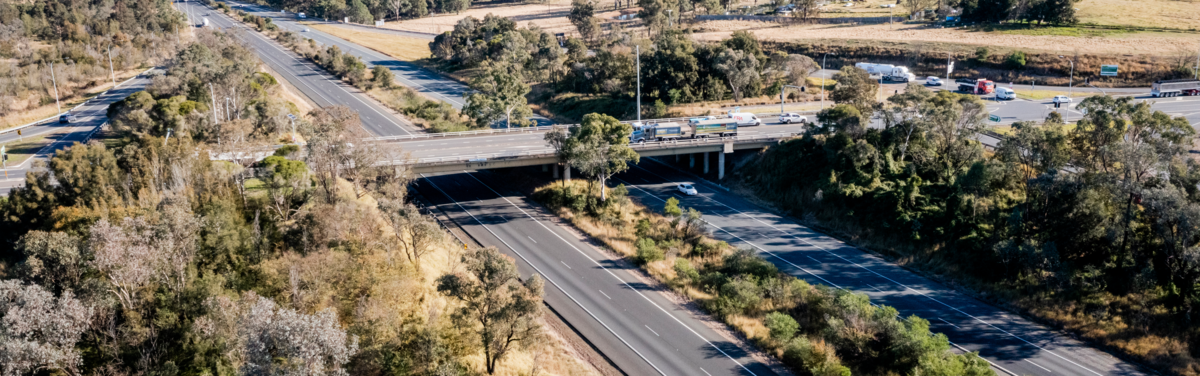
Delivering a safer, future-ready interchange through smart engineering, digital design, and sustainable bridge solutions.
The Picton Road Bridge – Diverging Diamond Interchange (DDI) project forms a key component of the planned M31 Hume Motorway upgrade, improving safety, freight efficiency, and network capacity as the gateway to the fast-growing Wilton 2040 region.
CSS was engaged by GHD to provide specialist bridge engineering and digital design services across multiple structural options, including strengthening and load rating of the existing bridge and concept design for two new twin-bridge configurations. Through advanced structural modelling, mine-subsidence analysis, and multidisciplinary digital coordination, CSS delivered constructible, resilient, and future-proofed bridge solutions that align with TfNSW’s network performance, operational safety, and long-term sustainability objectives.
Technical Achievements
CSS developed and assessed multiple bridge configuration options, including twin 2-span composite Super-T girder bridges and composite steel girder alternatives, while completing load rating and strengthening concepts to confirm the feasibility of safely reusing the existing structure. CSS’s work included mine-subsidence analysis and the development of mitigation strategies to maintain structural stability and service continuity. In addition, independent verification of constructability assessments ensured all proposed solutions were practical and buildable. The role further extended to leading digital engineering and coordinating multidisciplinary model integration, enhancing accuracy, interface management, and overall design efficiency.
Benefits to the Client
CSS demonstrated that the existing bridge could be safely strengthened and integrated, reducing cost, materials, and construction time, while improving constructability, delivery efficiency, and risk management through validated design options. The assessment undertaken by CSS enabled informed decision-making by clearly comparing new-build and reuse strategies in line with TfNSW objectives and reduced geotechnical and operational risk by addressing subsidence impacts early in the design process. The resulting solutions enhanced network resilience, supported sustainability goals, and improved long-term asset performance.