Bingara Recycled Water Treatment Plant
Investigation, Analysis & Civil Design
Targeted structural solutions enabling safe integration of new wastewater infrastructure within a live operational plant.
Civil Structures Studio (CSS) was engaged to support the installation of a new 8.5 m diameter, 6 m high wastewater tank within an existing bunded area at a recycled water treatment plant.
With the existing slab supporting an operational tank—and no historical civil documentation available—CSS delivered a staged program of investigation, analysis, and civil design to verify structural adequacy and develop remediation solutions. Working closely with the operator, geotechnical specialists, and the tank supplier, CSS ensured that the final Issued for Construction (IFC) design could be built safely and efficiently while maintaining uninterrupted plant operations.
Technical Achievements
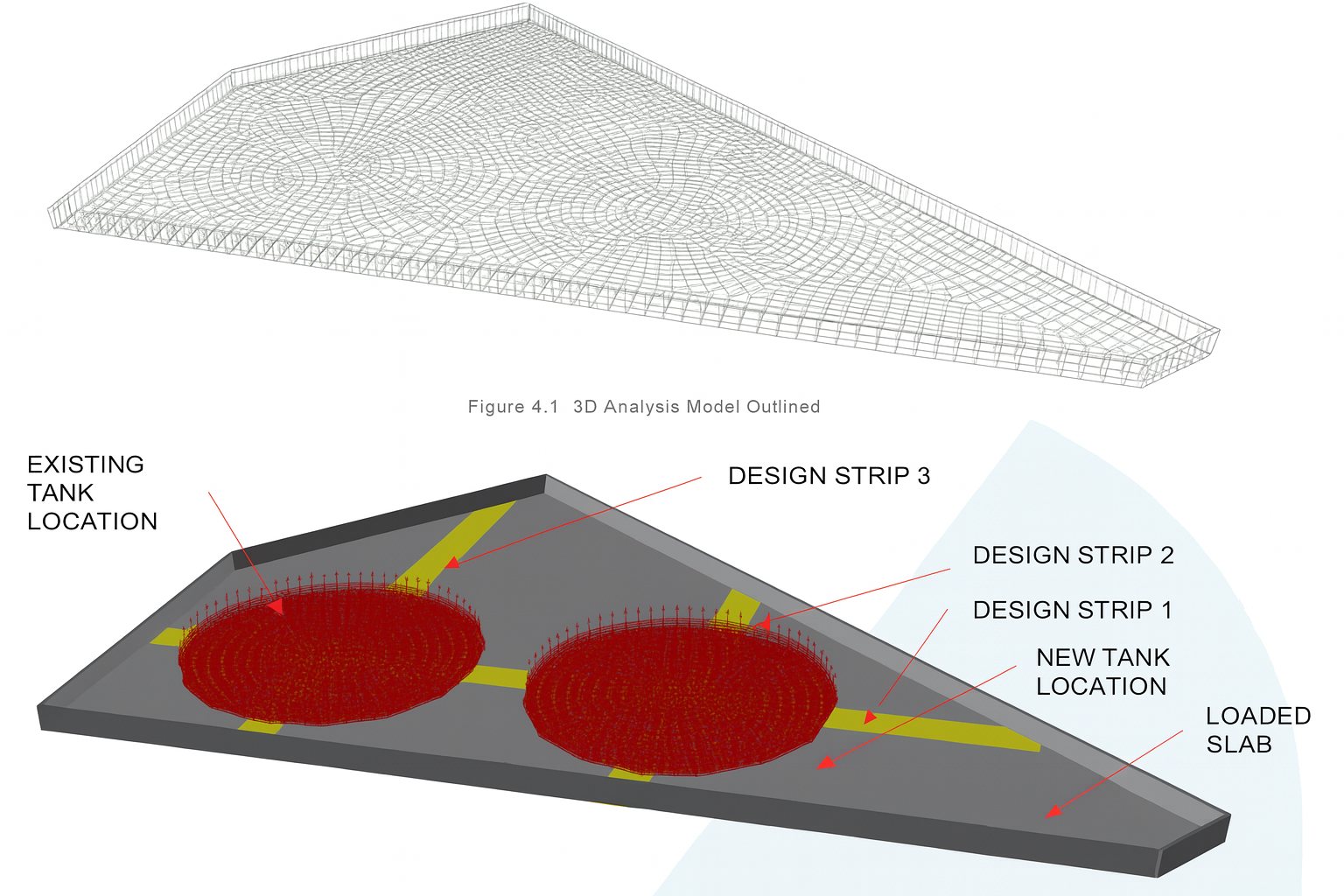
CSS undertook a detailed structural condition assessment and developed a structural model incorporating soil–structure interaction, subsidence effects, tank loading, and geotechnical parameters. Multiple upgrade pathways—from “do nothing” to full slab replacement—were technically validated, enabling the client to select an optimised scope based on Phase 1 findings. CSS also designed ancillary elements including bund wall modifications, raised slab interfaces, odour-unit footings and stormwater pit adjustments. IFC documentation was delivered with alignment to tank-supplier data, geotechnical inputs, and constructability constraints, ensuring a coordinated and buildable solution.
Benefits to the Client
The design approach enabled safe tank installation without requiring full slab replacement, significantly reducing cost, time, and operational interruption. Targeted remediation strategies extended the existing structure’s life while keeping the treatment plant in continuous service. Early alignment of assumptions with Veolia, Sydney Water, and supplier data reduced redesign risk, while clear staging and constructability planning minimised delivery risk. The work also provided structured, defensible engineering evidence to satisfy regulatory, safety, and compliance requirements.